Wafer Dicing Filter Mesh Manufacturer | Semiconductor Nylon Filter Mesh Supplier | Macrokun
Discover high-performance Wafer Dicing Filter Mesh for semiconductor coolant filtration. Macrokun manufactures customized nylon filter mesh with precise micron ratings, stable quality, and factory-direct pricing.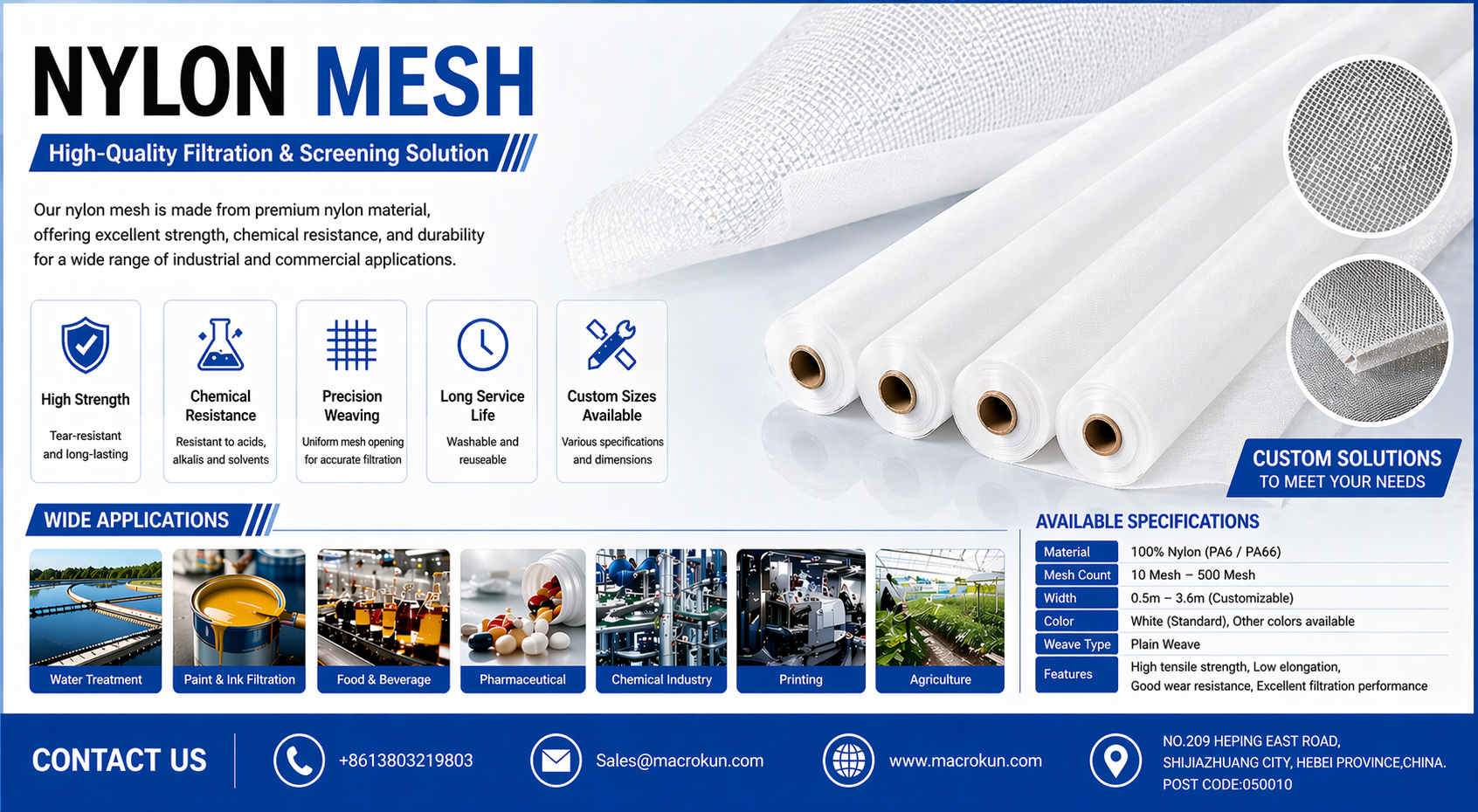
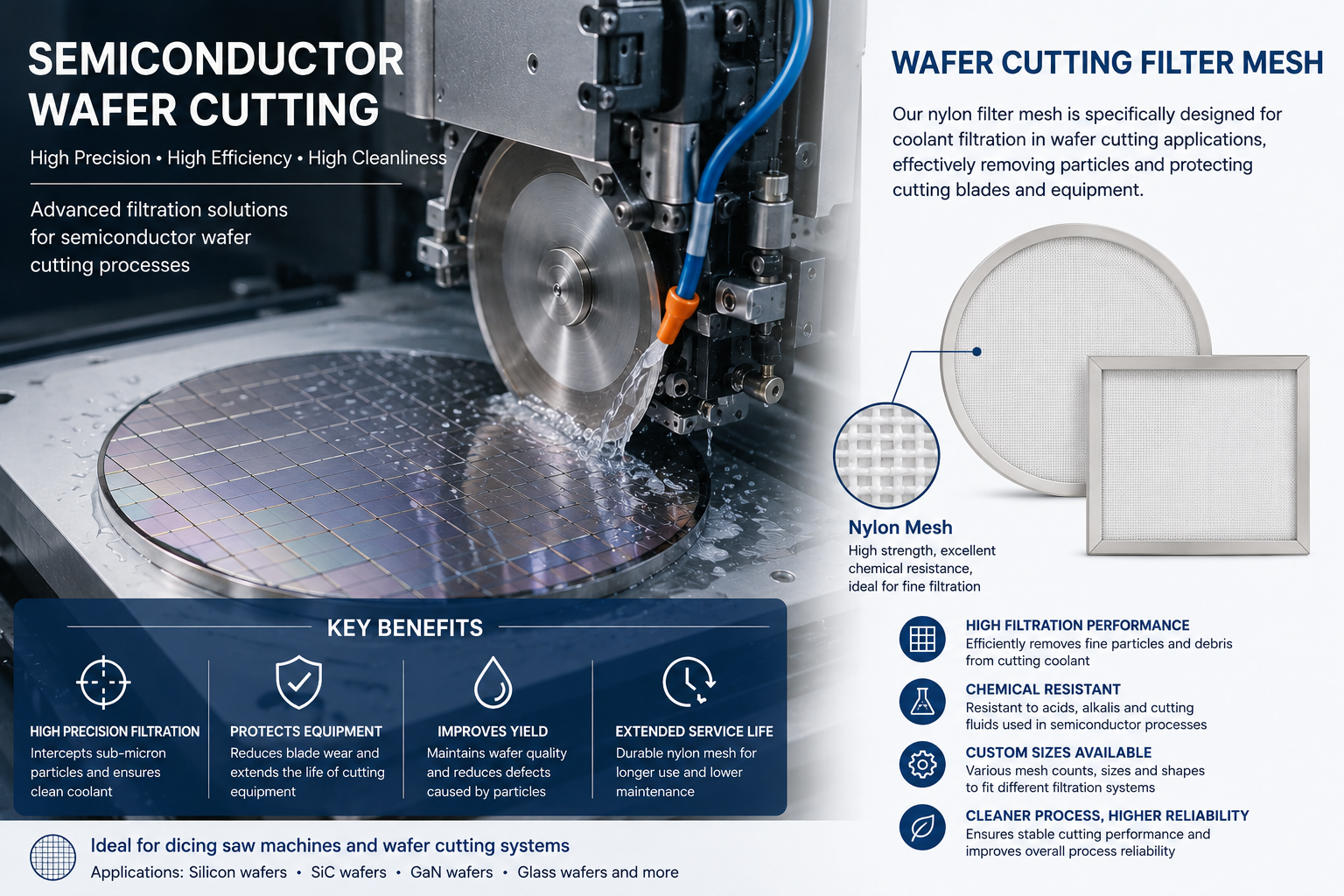
As semiconductor devices become increasingly compact and powerful, manufacturing processes demand higher levels of precision and cleanliness than ever before. One critical but often overlooked component in wafer dicing operations is the Wafer Dicing Filter Mesh.
During wafer cutting, large volumes of coolant are circulated continuously to dissipate heat, remove debris, and protect expensive dicing blades. Without effective filtration, silicon particles, ceramic dust, and abrasive contaminants quickly accumulate in the coolant system, leading to poor cutting quality, increased equipment wear, and reduced chip yields.
A high-quality wafer dicing filter mesh serves as the first line of defense in semiconductor coolant filtration systems. By efficiently removing coarse particles before they reach downstream filters, it helps maintain process stability and extends the lifespan of filtration equipment.
At Macrokun, we specialize in manufacturing customized nylon filter mesh solutions designed specifically for semiconductor filtration applications. As a professional filter mesh manufacturer and supplier, we provide precision-engineered products that meet the demanding requirements of wafer dicing, wafer grinding, and semiconductor process filtration systems worldwide.
What Is a Wafer Dicing Filter Mesh?
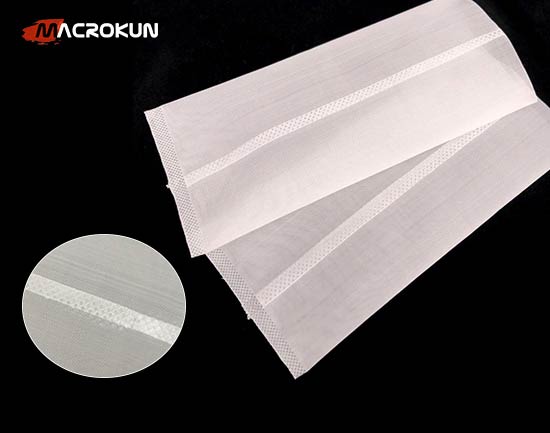
A wafer dicing filter mesh is a precision filtration medium installed within semiconductor coolant circulation systems. Its primary function is to capture larger particles generated during wafer cutting before they enter finer filtration stages.
During the dicing process, diamond blades cut silicon wafers into individual semiconductor chips. This operation produces various contaminants, including:
- Silicon particles
- Ceramic fragments
- Metal debris
- Abrasive dust
- Blade wear residues
If these contaminants remain in the coolant, they can damage equipment and negatively impact wafer quality.
By utilizing a properly selected filter mesh, semiconductor manufacturers can significantly improve coolant cleanliness and overall production efficiency.
Why Is Filtration Important in Wafer Dicing?
Modern wafer dicing equipment operates at extremely high speeds and tight tolerances. Even microscopic contaminants can affect cutting performance.
Effective filtration helps achieve several critical objectives:
Protect Dicing Blades
Removing abrasive particles reduces blade wear and extends blade life.
Improve Chip Yield
Cleaner coolant minimizes contamination and helps prevent defects such as chipping and micro-cracks.
Reduce Equipment Downtime
Filtered coolant prevents nozzle blockages, pump wear, and system failures.
Lower Operating Costs
Efficient filtration reduces coolant replacement frequency and maintenance requirements.
Maintain Process Consistency
Stable coolant quality ensures repeatable cutting performance throughout production cycles.
For these reasons, wafer dicing filtration has become a standard requirement in advanced semiconductor manufacturing facilities.
Typical Wafer Dicing Filtration System
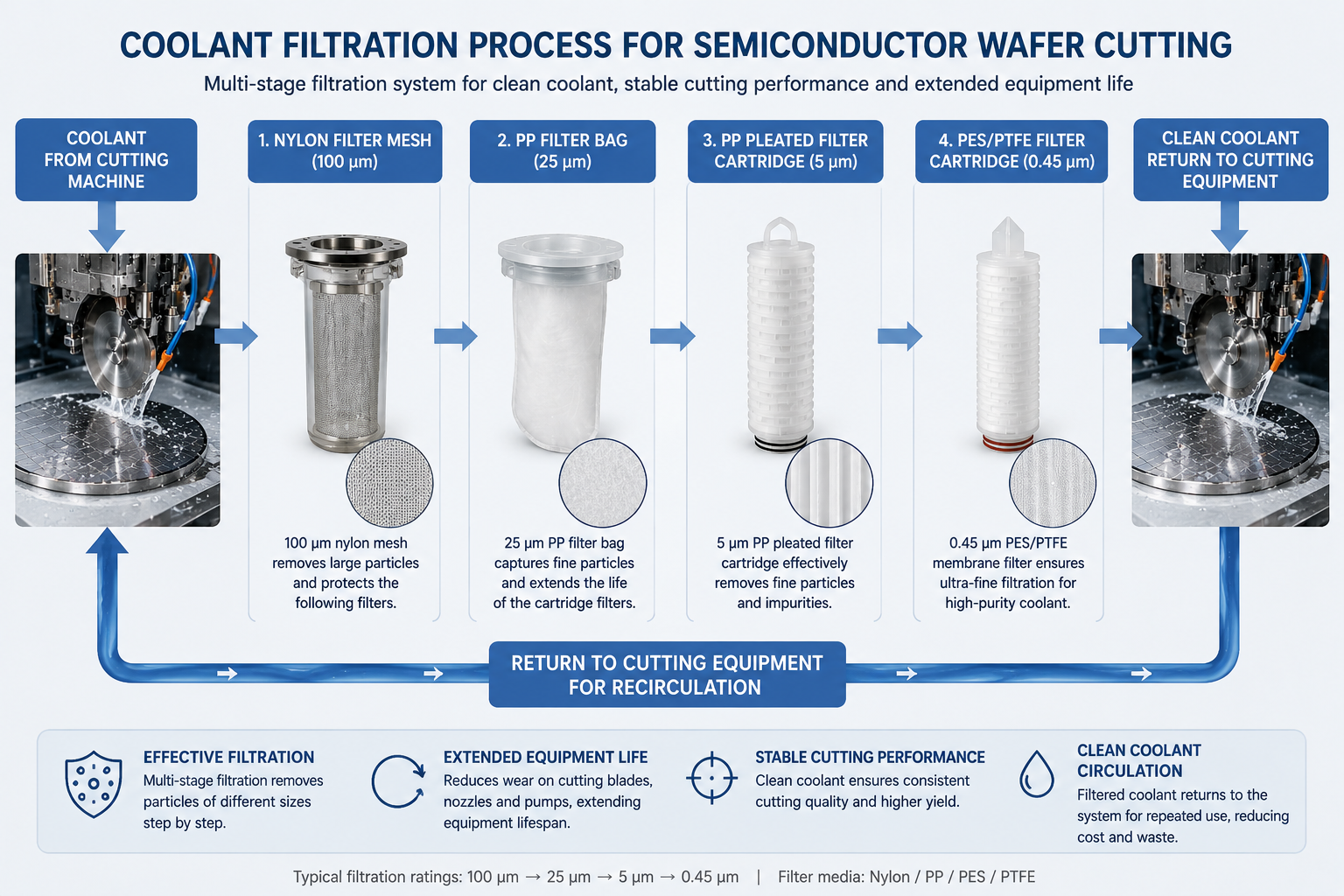
Most semiconductor coolant filtration systems use a multi-stage approach.
Stage 1: Nylon Filter Mesh (100 Micron)
Removes large silicon particles and debris.
Stage 2: PP Filter Bag (25 Micron)
Captures medium-sized contaminants.
Stage 3: Pleated Filter Cartridge (5 Micron)
Removes fine particles and suspended solids.
Stage 4: PES or PTFE Membrane Filter (0.45 Micron)
Provides ultra-fine filtration for high-purity coolant recirculation.
Filtration Flow Diagram
Cutting Coolant
↓
Wafer Dicing Filter Mesh (100 μm)
↓
PP Filter Bag (25 μm)
↓
PP Pleated Filter Cartridge (5 μm)
↓
PES/PTFE Membrane Filter (0.45 μm)
↓
Clean Coolant Returned to Dicing Equipment
This multi-stage configuration maximizes filtration efficiency while reducing operating costs.
Why Nylon Filter Mesh Is Preferred for Wafer Dicing Applications
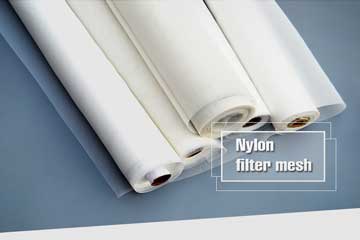
Among various filtration materials, nylon monofilament mesh is one of the most widely used options for semiconductor coolant filtration.
Excellent Abrasion Resistance
Wafer dicing generates sharp silicon particles that can rapidly wear conventional filtration materials.
Nylon mesh offers outstanding resistance to abrasion, ensuring long service life even under continuous operation.
Precise and Uniform Mesh Openings
High-quality monofilament nylon mesh provides consistent opening sizes, resulting in predictable filtration performance.
This is especially important in semiconductor manufacturing where process consistency is critical.
High Mechanical Strength
Nylon filter mesh can withstand:
- High flow rates
- Pressure fluctuations
- Frequent cleaning cycles
without deformation or damage.
Low Pressure Drop
The open structure of nylon mesh allows coolant to flow efficiently while maintaining filtration performance.
This reduces pump energy consumption and improves system efficiency.
Reusable and Cost-Effective
Many wafer dicing filter mesh products can be cleaned and reused multiple times, lowering operating expenses.
Applications of Wafer Dicing Filter Mesh
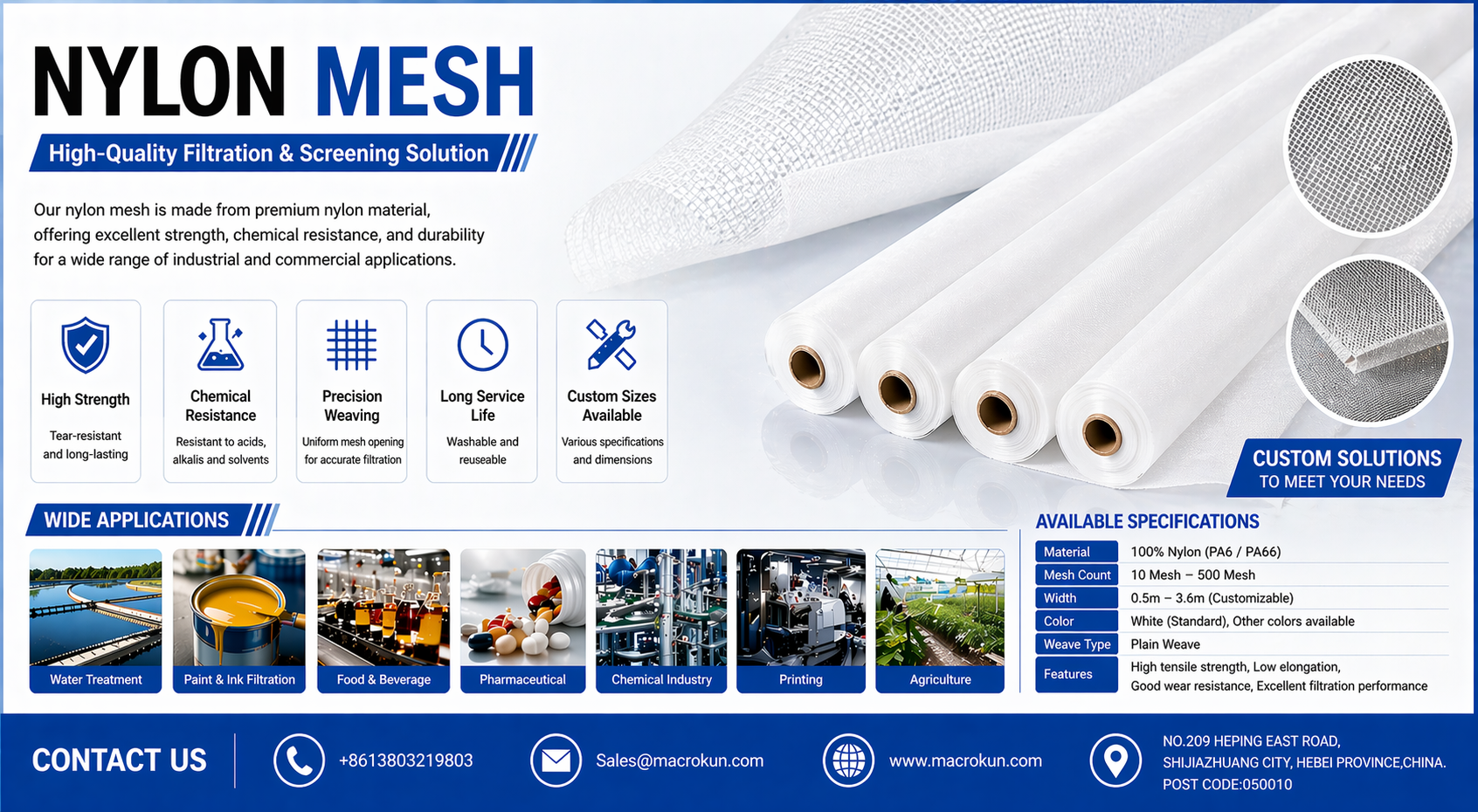
Although commonly associated with wafer cutting operations, wafer dicing filter mesh is used in a wide range of semiconductor manufacturing processes.
Wafer Dicing Machines
Captures silicon debris generated during cutting operations.
Wafer Back Grinding Systems
Removes grinding particles from coolant circulation systems.
Semiconductor Coolant Filtration
Protects pumps, valves, and downstream filtration equipment.
CMP Slurry Filtration
Used for pre-filtration of abrasive slurry systems.
Precision Manufacturing Equipment
Supports contamination control in high-tech manufacturing environments.
Electronic Component Production
Suitable for LED, MEMS, photovoltaic, and advanced packaging applications.
Technical Specifications of Macrokun Wafer Dicing Filter Mesh
Macrokun offers customizable filter mesh solutions to meet different semiconductor process requirements.
Material Options
- Nylon 6 Monofilament
- Nylon 66 Monofilament
Available Micron Ratings
- 20 μm
- 25 μm
- 40 μm
- 50 μm
- 75 μm
- 100 μm
- 150 μm
- 200 μm
Mesh Count Range
- 60 Mesh
- 80 Mesh
- 100 Mesh
- 150 Mesh
- 200 Mesh
- 300 Mesh
- 400 Mesh
Width Options
- Customized roll widths available
- Slit rolls
- Die-cut discs
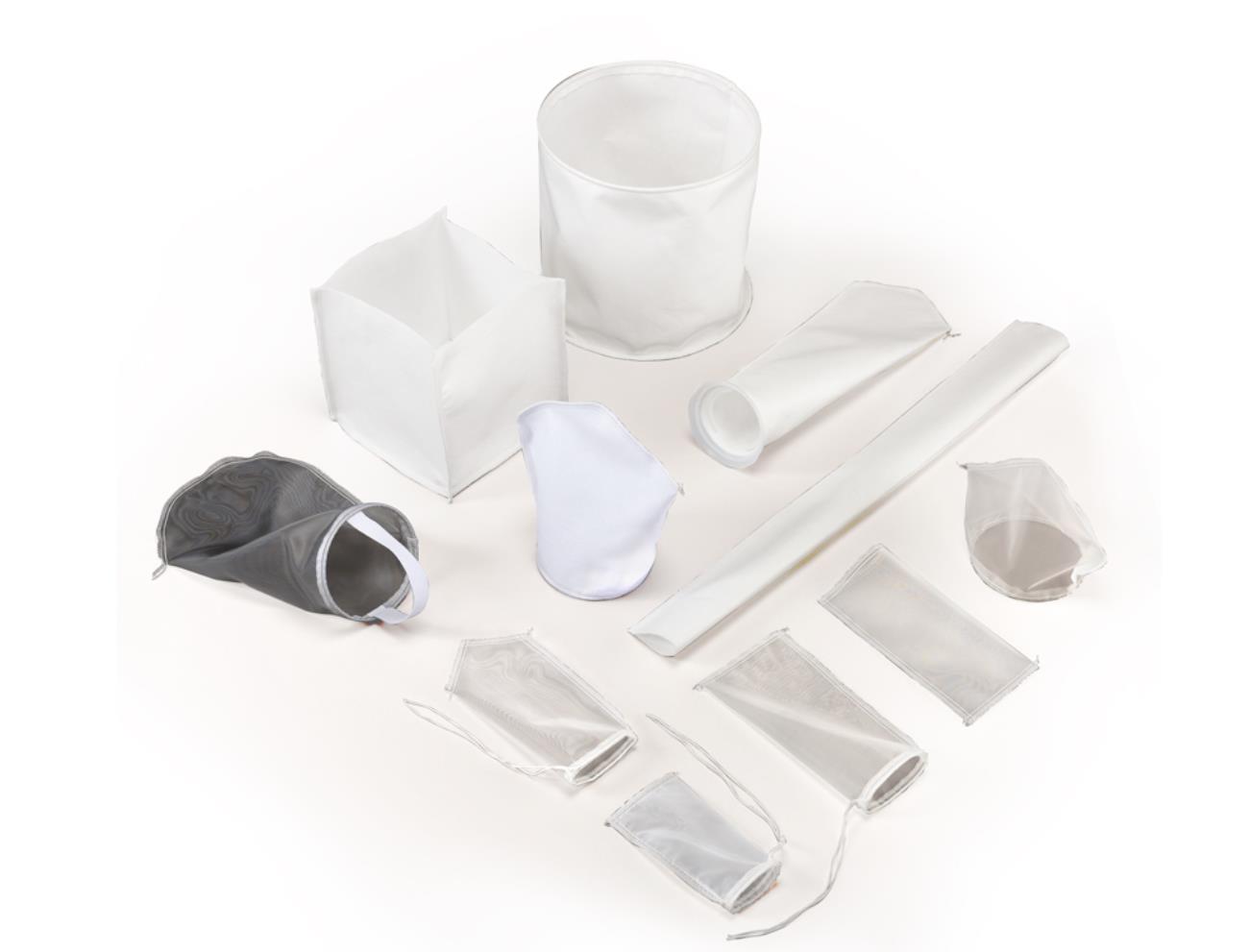
- Filter tubes
- Filter bags
Operating Temperature
Up to 120°C
Chemical Resistance
Compatible with most water-based coolants and process liquids used in semiconductor manufacturing.
Advantages of Choosing Macrokun as Your Wafer Dicing Filter Mesh Supplier
Selecting the right supplier is just as important as choosing the right filter mesh.
At Macrokun, we focus on providing high-performance filtration solutions tailored to industrial and semiconductor applications.
Direct Manufacturer
As a manufacturer rather than a trading company, we offer:
- Competitive pricing
- Stable quality control
- Faster lead times
- Flexible production schedules
Custom Manufacturing Capability
We provide customized solutions based on customer specifications, including:
- Custom micron ratings
- Special dimensions
- Laser-cut filter discs
- Sewn filter bags
- Molded filter components
Strict Quality Control
Every production batch undergoes inspection for:
- Mesh opening accuracy
- Tensile strength
- Thickness consistency
- Filtration performance
Global Supply Experience
Our products are supplied to customers in:
- North America
- Europe
- Southeast Asia
- Japan
- South Korea
- Middle East
Technical Support
Our engineering team assists customers in selecting the most suitable filter mesh for their specific filtration requirements.
How to Choose the Right Wafer Dicing Filter Mesh
Selecting the proper filter mesh depends on several factors.
Particle Size Distribution
Determine the size of contaminants generated during the process.
Flow Rate Requirements
Higher flow rates may require larger filtration areas.
Coolant Type
Verify compatibility with process chemicals and additives.
Filtration Efficiency
Balance filtration precision with acceptable pressure drop.
Maintenance Frequency
Consider reusable mesh solutions to reduce operational costs.
Working with an experienced manufacturer can help optimize system performance and reduce total filtration costs.
Future Trends in Semiconductor Filtration
As semiconductor manufacturing advances toward smaller nodes and higher production efficiency, filtration systems are becoming increasingly sophisticated.
Emerging trends include:
- Ultra-fine filtration technologies
- Automated filtration monitoring
- High-purity filtration materials
- Sustainable reusable filtration solutions
- Customized filtration systems for advanced packaging processes
Nylon filter mesh remains a critical component within these evolving filtration architectures due to its durability, precision, and cost-effectiveness.
Conclusion
A reliable Wafer Dicing Filter Mesh plays a vital role in maintaining coolant cleanliness, protecting equipment, and improving semiconductor production efficiency.
By incorporating high-quality nylon filter mesh into wafer dicing filtration systems, manufacturers can reduce contamination, extend equipment life, and achieve more consistent process performance.
As a professional manufacturer and supplier, Macrokun provides precision-engineered wafer dicing filter mesh solutions tailored to the demanding requirements of semiconductor manufacturing. Whether you need standard mesh products or fully customized filtration components, our team is ready to support your project with reliable quality and expert technical assistance.
Request a Free Quote Today
Looking for a trusted Wafer Dicing Filter Mesh Manufacturer or Semiconductor Filter Mesh Supplier?
Contact Macrokun today to discuss your application requirements. Our experts can help you select the ideal mesh specification, customize product dimensions, and provide competitive factory-direct pricing for your next semiconductor filtration project.
RELATED PRODUCTS

RELATED ARTICLES
Tags:
 WhatsApp