The Role of Nylon Mesh Filter Thread Diameter in Filtration Performance
Focusing on thread diameter as a functional design parameter enables more predictable filtration outcomes and improves overall system reliability.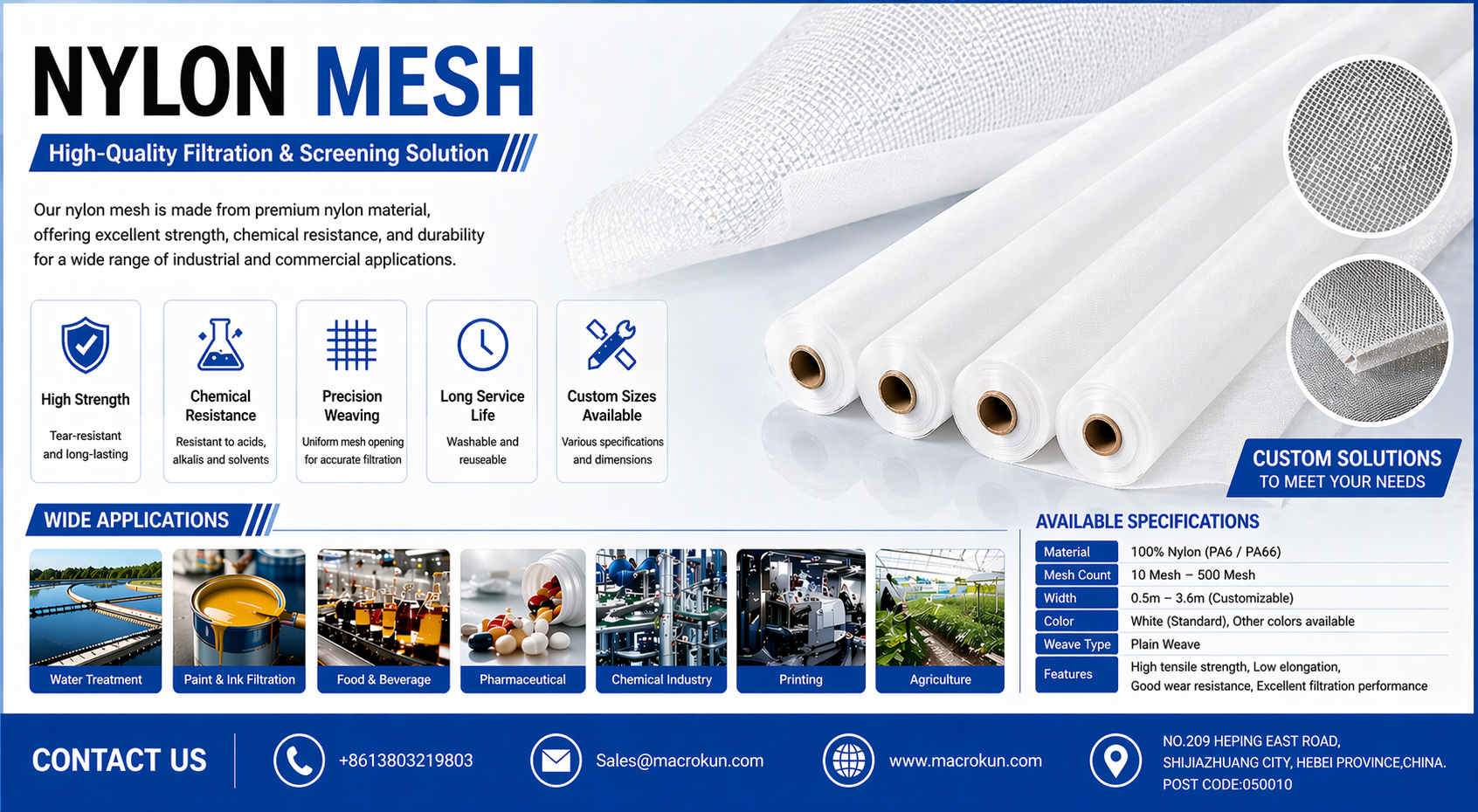
Nylon filter mesh is widely recognized for its balance of strength, flexibility, and filtration precision. Among the structural parameters that define its performance, nylon mesh filter thread diameter plays a critical role. While opening size often receives more attention, thread diameter directly influences mechanical stability, flow behavior, and long-term durability in real filtration environments.
Understanding how thread diameter interacts with mesh structure helps users select nylon filter mesh that performs reliably under specific operating conditions rather than relying solely on micron ratings or mesh count.
What Nylon Mesh Filter Thread Diameter Means in Practice
Nylon mesh filter thread diameter refers to the thickness of the individual nylon filaments used to weave the mesh. It is typically measured in microns and determines how robust each strand is within the woven structure.
.jpg)
Thicker threads provide higher tensile strength and abrasion resistance, while thinner threads allow for higher open area and improved flow efficiency. The selection of thread diameter is therefore a functional decision that affects both filtration performance and service life.
Rather than being an isolated specification, thread diameter must be evaluated together with opening size and mesh count to fully understand how a nylon filter mesh will behave in operation.
Relationship Between Thread Diameter and Mesh Opening
Thread diameter has a direct impact on the resulting opening size of nylon filter mesh. For a given mesh count, increasing the thread diameter reduces the open space between filaments, leading to smaller effective openings. Conversely, thinner threads increase open area without changing the mesh count.
This relationship explains why two nylon filter meshes with the same nominal mesh count may perform differently in filtration systems. The difference often lies in the nylon mesh filter thread diameter used during manufacturing.
By focusing on both parameters, users can avoid mismatches that lead to unexpected pressure drop, insufficient particle retention, or reduced throughput.
Influence on Flow Rate and Pressure Drop
Thread diameter significantly affects flow behavior through nylon filter mesh. Thicker threads reduce the percentage of open area, increasing flow resistance and pressure drop across the mesh. This can be beneficial in applications where controlled flow or enhanced particle capture is required.
In contrast, thinner thread diameters increase open area and allow higher flow rates at lower pressure differentials. This makes them suitable for applications where throughput efficiency is prioritized and particle loads are moderate.
Selecting the appropriate nylon mesh filter thread diameter ensures that the filtration system operates within its designed hydraulic limits without excessive energy consumption or instability.
Mechanical Strength and Structural Stability
One of the primary advantages of using a larger thread diameter is improved mechanical strength. Thicker nylon filaments resist stretching, tearing, and deformation under tension or pressure. This is particularly important in pressurized filtration systems or applications involving frequent cleaning cycles.
In vibrating screens or dynamic filtration environments, thread diameter contributes to dimensional stability. Nylon filter mesh with insufficient thread thickness may deform over time, altering opening size and compromising filtration accuracy.
Choosing the correct thread diameter helps maintain consistent performance throughout the service life of the mesh, even under demanding operating conditions.
Abrasion Resistance and Wear Characteristics
Nylon filter mesh is often exposed to abrasive particles, especially in industrial processes involving powders, granules, or suspensions. Nylon mesh filter thread diameter influences how well the mesh withstands continuous particle contact.
Thicker threads offer greater resistance to abrasion and surface wear, extending usable lifespan. Thinner threads may deliver higher filtration efficiency initially but can wear more quickly in abrasive environments.
Balancing abrasion resistance with filtration precision is essential when selecting nylon filter mesh for long-term industrial use.
Impact on Cleaning and Reusability
Thread diameter also affects how nylon filter mesh responds to cleaning. Meshes with thicker threads are generally more tolerant of mechanical cleaning methods such as brushing or backwashing. They retain structural integrity even after repeated cleaning cycles.
Meshes made with finer thread diameters may require gentler cleaning techniques to avoid damage or deformation. However, they often release trapped particles more easily due to higher open area and smoother flow paths.
Considering cleaning frequency and method during the selection process helps ensure that the nylon mesh filter thread diameter aligns with maintenance practices.
Thread Diameter in Customized Nylon Filter Mesh Solutions
Many applications require customized nylon filter mesh rather than standard specifications. Thread diameter can be tailored to meet specific requirements related to strength, flow, and filtration accuracy.
Custom configurations allow manufacturers to adjust thread diameter while maintaining a target opening size, resulting in optimized performance for specialized systems. This flexibility is particularly valuable in OEM filtration equipment or process-specific applications.
By fine-tuning nylon mesh filter thread diameter, users can achieve a filtration solution that fits both mechanical and operational demands without unnecessary compromises.
Practical Considerations for Thread Diameter Selection
Selecting the appropriate thread diameter begins with understanding the operating environment. Factors such as pressure, temperature, particle hardness, and cleaning frequency all influence the optimal choice.
Rather than defaulting to the finest possible mesh, evaluating how thread diameter supports system stability and durability often leads to better long-term results. A well-balanced nylon filter mesh delivers consistent filtration performance while minimizing maintenance and replacement costs.
RELATED PRODUCTS

RELATED ARTICLES
Tags:
 WhatsApp