The Ultimate Guide to Industrial Nylon Filter Mesh: Engineering Precision for 2026 Manufacturing
The Nylon Filter Mesh is a silent hero of modern manufacturing. From the food on our tables to the cars we drive, its precision makes our world cleaner and safer. Choosing the right mesh is an investment in your process integrity.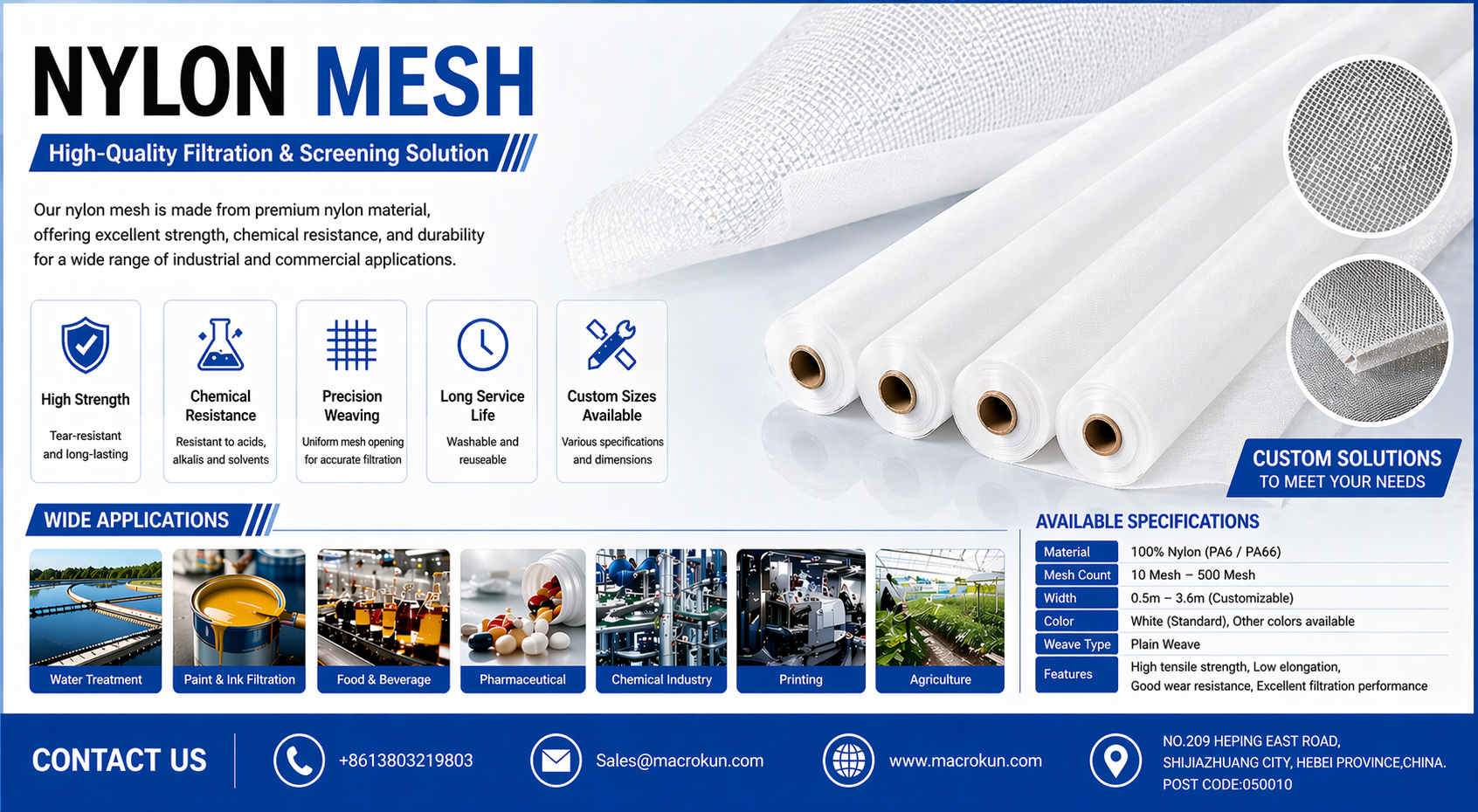
In the high-stakes world of industrial separation, the Nylon Filter Mesh (Polyamide) remains the undisputed standard for precision, durability, and versatility. As global industries move toward sub-micron accuracy and stricter regulatory compliance, selecting the right mesh is no longer a generic procurement task—it is a critical engineering decision.
Whether you are filtering fine pigments in the automotive sector, ensuring food safety in dairy processing, or managing complex extractions in the botanical industry, understanding the technical nuances of Nylon Filter Mesh is essential for optimizing yield and reducing downtime.
1. The Material Science: Why Nylon Filter Mesh?
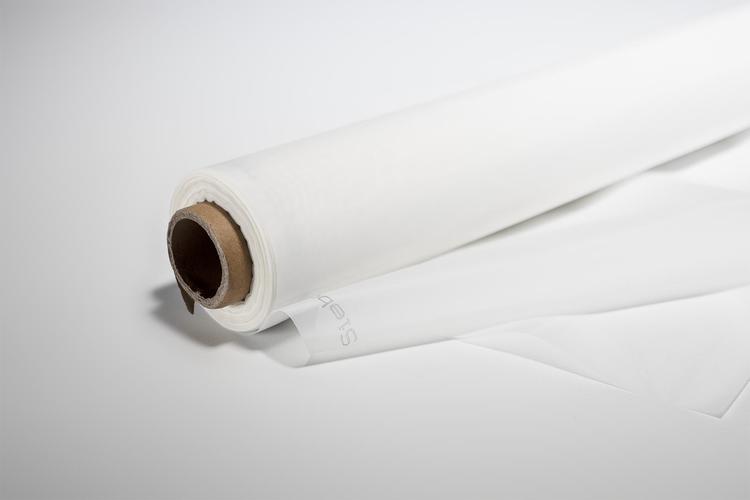
Nylon Filter Mesh, primarily constructed from Polyamide 6 (PA6) or Polyamide 6.6 (PA66), is a monofilament woven fabric celebrated for its unique mechanical properties. Unlike polyester or stainless steel, nylon offers a specific balance of elasticity and abrasion resistance that is vital for vibrating or high-pressure filtration systems.
Key Physical Properties:
-
High Abrasion Resistance: Nylon is remarkably "tough," making it ideal for processes involving abrasive particulates.
-
Elasticity and Flex Life: The fibers can withstand repeated mechanical stress, which is crucial for vacuum belt filters and centrifuge liners.
-
Alkaline Resistance: Nylon performs exceptionally well in high-pH environments where other synthetic fibers might degrade.
-
Hydrophilic Surface: Nylon naturally attracts water, which helps in liquid filtration by lowering the initial pressure required for "wetting" the mesh.
2. Technical Specifications: Mastering Mesh and Micron
When sourcing Nylon Filter Mesh, the most critical data points are the micron rating, thread diameter, and percentage of open area.
Understanding the Geometry
The relationship between the thread diameter ($d$) and the mesh opening ($w$) determines the Percentage of Open Area ($\alpha$), which directly impacts flow rates and throughput.
The formula for calculating the open area is:
Precision Mesh Selection Table
| Micron Rating (μm) | Mesh Count (Threads/cm) | Open Area (%) | Typical Application |
| 5 µm | 200+ | 1% - 5% | Fine laboratory polishing |
| 25 µm | 140 | 20% - 25% | Fine pigment filtration |
| 100 µm | 55 | 35% - 40% | Food processing / Flour milling |
| 250 µm | 24 | 45% - 50% | Wastewater treatment / Pre-filtration |
| 500 µm | 14 | 55% + | Coarse straining / Industrial cooling |
3. Industrial Applications: Where Precision Meets Performance
The versatility of Nylon Filter Mesh allows it to serve a diverse range of sectors. Each application requires a specific weave type—most commonly "Plain Weave"—to ensure consistent particle retention.
A. Food and Beverage Processing
In 2026, food safety regulations (such as FDA and EC 1935/2004) are more stringent than ever. Nylon Filter Mesh is used for:
-
Nut Milk and Juice Extraction: Providing a smooth, sediment-free texture.
-
Flour Milling: Durable sifting screens that resist the heat of friction.
-
Dairy Filtration: Removing impurities from raw milk while maintaining high flow rates.
B. Automotive and Coatings
In automotive paint shops, even a 5-micron contaminant can cause a total finish failure. Nylon Filter Mesh is the preferred choice for:
-
Paint Strainers: Ensuring absolute purity in topcoats.
-
Fuel Filter Components: Providing long-term resistance to hydrocarbons and additives.
C. Medical and Healthcare
Precision-woven Nylon Filter Mesh is utilized in:
-
Blood Filtration: Requiring biocompatibility and extreme micron accuracy.
-
Diagnostic Test Kits: Serving as a consistent substrate for wicking and separation.
D. Botanical and Essential Oil Extraction
For the burgeoning extraction industry, Nylon Filter Mesh is the foundation of high-purity collection. Its ability to be heat-sealed into bags or screens makes it ideal for isolating specific glandular structures without fiber migration.
4. Manufacturing Quality: What Defines "High Quality"?
Not all Nylon Filter Mesh is created equal. When evaluating a manufacturer, professional buyers look for three specific quality indicators:
1. Thread Uniformity
A high-quality mesh uses high-precision monofilament. If the thread thickness varies by even $2\mu m$, the resulting mesh openings will be inconsistent, leading to "bypass"—where particles larger than the micron rating slip through the filter.
2. Surface Treatment
Top-tier Nylon Filter Mesh undergoes a proprietary heat-setting process. This locks the threads in place, ensuring that the mesh does not "shift" or stretch under pressure. Without heat-setting, a 50-micron mesh could easily expand to 70 microns during a high-pressure cycle.
3. Compliance and Cleanliness
For regulated industries, the mesh must be:
-
Free of Fluorescent Whitening Agents (FWAs).
-
Manufactured in a Dust-Free Environment: Preventing cross-contamination of foreign fibers.
-
Certified: FDA, REACH, and RoHS compliance documentation should be readily available.
5. Strategic ROI: The Cost of Quality in 2026
When sourcing Nylon Filter Mesh in bulk, the temptation to choose the lowest price per meter is high. However, a Total Cost of Ownership (TCO) analysis usually favors premium mesh.
-
Durability vs. Replacement: A high-tension, heat-set mesh may last 3x longer in a vibrating sifter than a low-cost alternative.
-
Yield Optimization: If a precision mesh increases your "first-pass" success rate by even 2%, the annual revenue gain far outweighs the cost of the fabric.
-
Waste Reduction: Inconsistent mesh leads to batch rejections. In the pharmaceutical or fine chemical sectors, one rejected batch can cost thousands of dollars.
6. Maintenance and Cleaning Protocols
To extend the life of your Nylon Filter Mesh, follow these industrial best practices:
-
Avoid High Heat: Nylon begins to soften at approximately 170°C (338°F) and melts at 215°C (419°F). Always operate within the safe thermal window.
-
Chemical Sensitivity: While resistant to alkalis, Nylon is sensitive to strong acids and oxidizing agents (like bleach). Always consult a chemical compatibility chart before cleaning.
-
Ultrasonic Cleaning: For fine micron mesh (under $50\mu m$), ultrasonic cleaning is the most effective way to remove "blinded" particles without damaging the delicate weave.
7. Frequently Asked Questions (FAQ)
Q: What is the difference between Nylon 6 and Nylon 6.6 for filtration?
A: Nylon 6.6 generally offers a slightly higher melting point and better mechanical strength, while Nylon 6 is often more cost-effective and has better surface aesthetics. For most filtration tasks, they are interchangeable, but 6.6 is preferred for high-heat applications.
Q: Can Nylon Filter Mesh be used for air filtration?
A: Absolutely. It is frequently used as a pre-filter in HVAC systems and as a primary filter in household vacuum cleaners due to its high dust-holding capacity and washability.
Q: How do I calculate the flow rate for a specific mesh?
A: Flow rate depends on the pressure drop ($\Delta P$) and the viscosity of the fluid. However, a higher Percentage of Open Area ($\alpha$) always correlates with a lower initial pressure drop and higher throughput.
Conclusion: Partner with a Specialist
The Nylon Filter Mesh is a silent hero of modern manufacturing. From the food on our tables to the cars we drive, its precision makes our world cleaner and safer. Choosing the right mesh is an investment in your process integrity.
Are you looking for precision-grade Nylon Filter Mesh for your 2026 production goals? Our engineering team provides custom slit-to-size rolls, discs, and fabricated bags tailored to your exact micron requirements.
[Request a Technical Quote] | [Download the Micron-to-Mesh Chart] | [Order a Sample Kit]
RELATED PRODUCTS
RELATED ARTICLES
Tags:
 WhatsApp