Nylon Filter Mesh vs Polyester Mesh: Understanding the Differences in Industrial Filtration
By aligning material selection with real operating conditions, filtration systems can achieve stable performance, predictable maintenance cycles, and improved overall efficiency.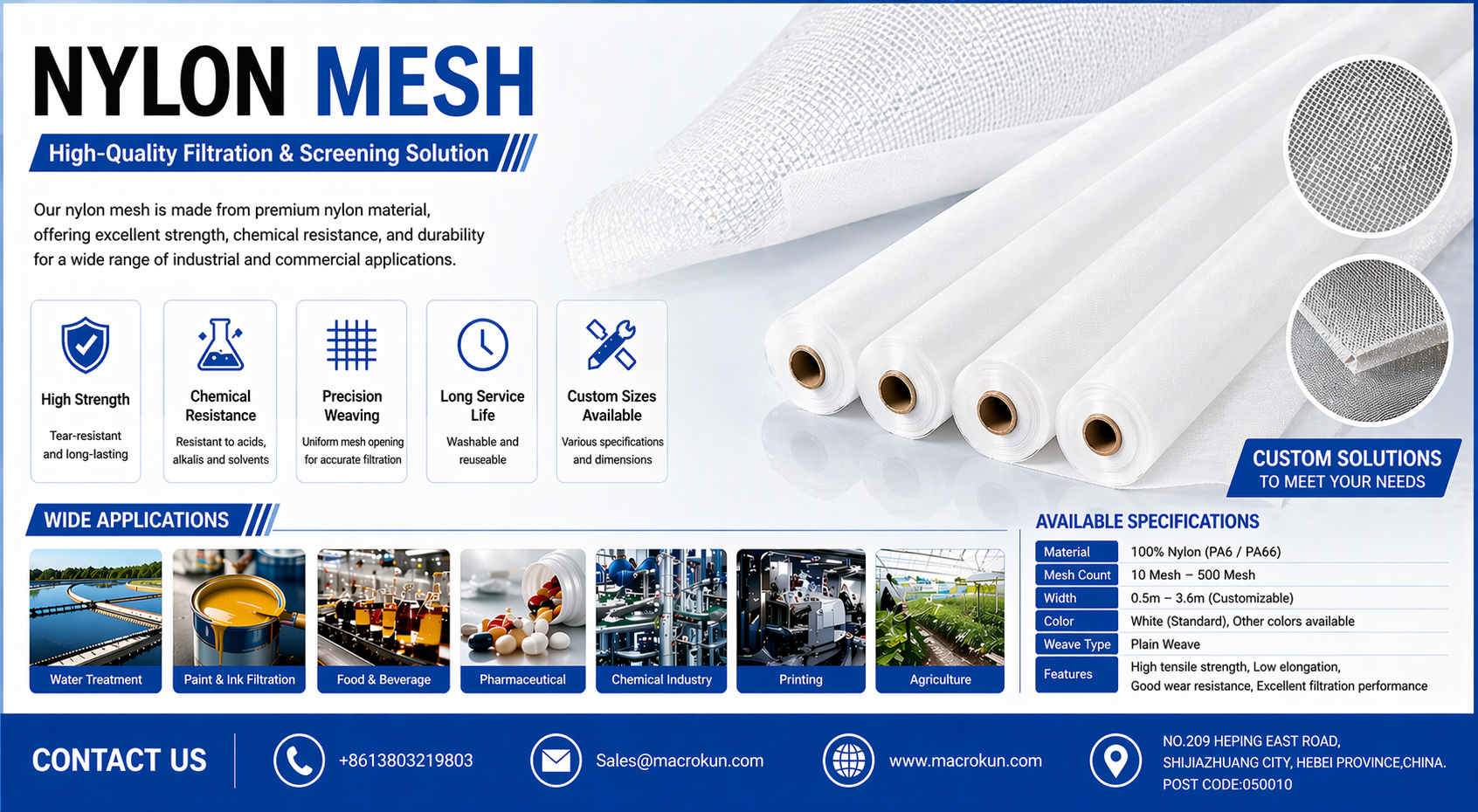
When selecting filtration materials for industrial, food, chemical, or water treatment applications, nylon filter mesh and polyester mesh are two of the most commonly considered options. Both are widely used, woven synthetic meshes, yet their material characteristics, performance behavior, and suitability vary depending on operating conditions. Understanding the differences between nylon filter mesh vs polyester mesh helps engineers, procurement teams, and operators make informed decisions based on process demands rather than assumptions.
This discussion focuses on practical performance, material behavior, and real-world application considerations rather than theoretical comparisons.
Material Composition and Structural Behavior
Nylon filter mesh is manufactured from polyamide fibers, known for their flexibility, toughness, and mechanical resilience. The woven structure of nylon filter mesh provides uniform pore distribution while retaining a degree of elasticity. This flexibility allows nylon mesh to absorb mechanical stress without permanent deformation, especially in systems subject to vibration or pressure fluctuation.
.jpg)
Polyester mesh, typically produced from polyethylene terephthalate fibers, is more dimensionally stable under load. It exhibits lower stretch compared to nylon, which can be beneficial in applications where precise dimensional consistency is critical over long operating periods.
In practice, the structural difference means nylon filter mesh adapts better to dynamic systems, while polyester mesh performs well in rigid, fixed filtration setups.
Filtration Accuracy and Pore Stability
Both nylon filter mesh and polyester mesh can be manufactured with controlled pore sizes suitable for surface filtration. Nylon filter mesh is often favored in applications where smooth flow and controlled particle retention are required. Its woven structure allows for consistent filtration behavior across the mesh surface.
Polyester mesh also provides reliable pore geometry, particularly in dry or low-moisture environments. However, under prolonged exposure to certain liquids, polyester fibers may show slightly reduced flexibility, which can affect performance in systems requiring repeated cleaning or backwashing.
When comparing nylon filter mesh vs polyester mesh, nylon tends to perform more consistently in applications involving frequent wet cycles and mechanical handling.
Mechanical Strength and Durability
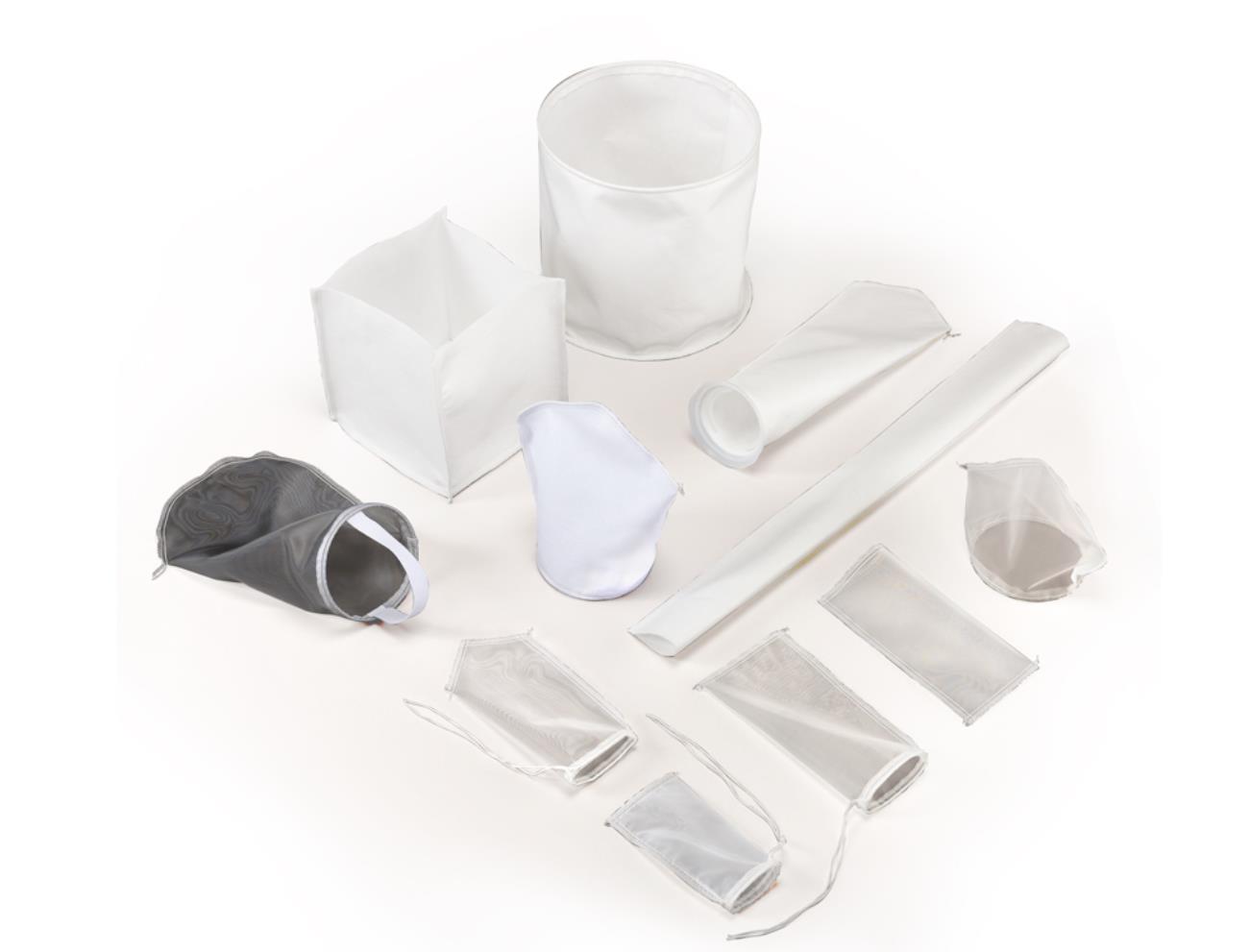
Nylon filter mesh is well known for its abrasion resistance and tensile strength. It can withstand repeated installation, removal, and cleaning without fiber breakage. This durability makes it suitable for reusable filtration elements such as filter bags, discs, tubes, and custom-shaped components.
Polyester mesh offers good tensile strength but is generally less resistant to abrasion than nylon. In systems where sharp particles or frequent mechanical contact are present, polyester mesh may experience faster wear.
For applications involving repeated cleaning cycles or high mechanical stress, nylon filter mesh often delivers longer service life.
Chemical and Thermal Resistance
Chemical compatibility is a critical factor in mesh selection. Nylon filter mesh performs well in many aqueous environments and is compatible with a wide range of mild chemicals. It maintains stability in neutral and slightly alkaline conditions, making it suitable for water treatment, food processing, and many industrial filtration systems.
Polyester mesh offers better resistance to acids and certain solvents, which can make it advantageous in specific chemical processing applications. However, polyester may become brittle under prolonged exposure to elevated temperatures or aggressive cleaning agents.
In terms of thermal resistance, polyester generally tolerates higher continuous operating temperatures, while nylon filter mesh performs well in moderate temperature ranges commonly found in filtration processes.
Cleaning and Reusability
Nylon filter mesh is particularly well suited for reusable filtration systems. Its flexibility allows it to withstand backwashing, spraying, and mechanical cleaning without losing pore structure. The smooth fiber surface helps release trapped particles during cleaning, supporting stable long-term performance.
Polyester mesh can also be cleaned and reused, but its lower elasticity may result in reduced performance if subjected to aggressive cleaning methods. Over time, repeated stress can affect fiber alignment.
For systems designed around reuse and regular maintenance, nylon filter mesh provides operational advantages.
Application Suitability
Nylon filter mesh is widely used in water filtration, food and beverage processing, chemical pre-filtration, pharmaceutical processing, and general industrial separation. Its balanced properties make it adaptable to flat sheets, filter discs, tubes, rolls, and custom-cut formats.
Polyester mesh is commonly used in air filtration, dry powder separation, and applications where chemical resistance to acids is a primary concern. Its dimensional stability supports fixed installations where minimal deformation is desired.
The choice between nylon filter mesh vs polyester mesh often comes down to whether flexibility and reusability or rigidity and chemical specificity are more important for the application.
Cost and Operational Value
Initial material costs for nylon filter mesh and polyester mesh are generally comparable, though pricing can vary based on mesh count, filament type, and fabrication method. From an operational perspective, nylon filter mesh often delivers better long-term value due to its durability and reusability.
Reduced replacement frequency and lower maintenance-related downtime can offset initial material costs, particularly in high-throughput or continuous processes.
Polyester mesh may offer cost advantages in single-use or low-stress applications where its specific material strengths are fully utilized.
Practical Selection Considerations
When evaluating nylon filter mesh vs polyester mesh, it is essential to consider the full operating environment rather than focusing on a single property. Factors such as fluid type, temperature, cleaning method, pressure conditions, and expected service life all influence material performance.
In many cases, nylon filter mesh provides a versatile solution capable of handling diverse filtration challenges with consistent results. Polyester mesh remains a valuable option for targeted applications with specific chemical or structural requirements.
RELATED PRODUCTS
RELATED ARTICLES
Tags:
 WhatsApp