The Ultimate Guide to Screen Printing Mesh Sizes: Precision Selection for 2026
In the world of professional imaging, the screen printing mesh size is the single most important variable in your production workflow. It dictates ink deposit thickness, detail resolution, and the overall hand of the finished print. As we move into 20
In the world of professional imaging, the screen printing mesh size is the single most important variable in your production workflow. It dictates ink deposit thickness, detail resolution, and the overall "hand" of the finished print. As we move into 2026, with the rise of high-solid acrylic inks and intricate halftone designs, choosing the correct mesh count is no longer a suggestion—it is a technical requirement for survival.
Whether you are printing high-opacity whites on dark garments or fine-line electronics, this guide provides the definitive breakdown of screen printing mesh sizes to help you optimize your press for maximum efficiency.
1. Decoding the Numbers: What is Mesh Count?
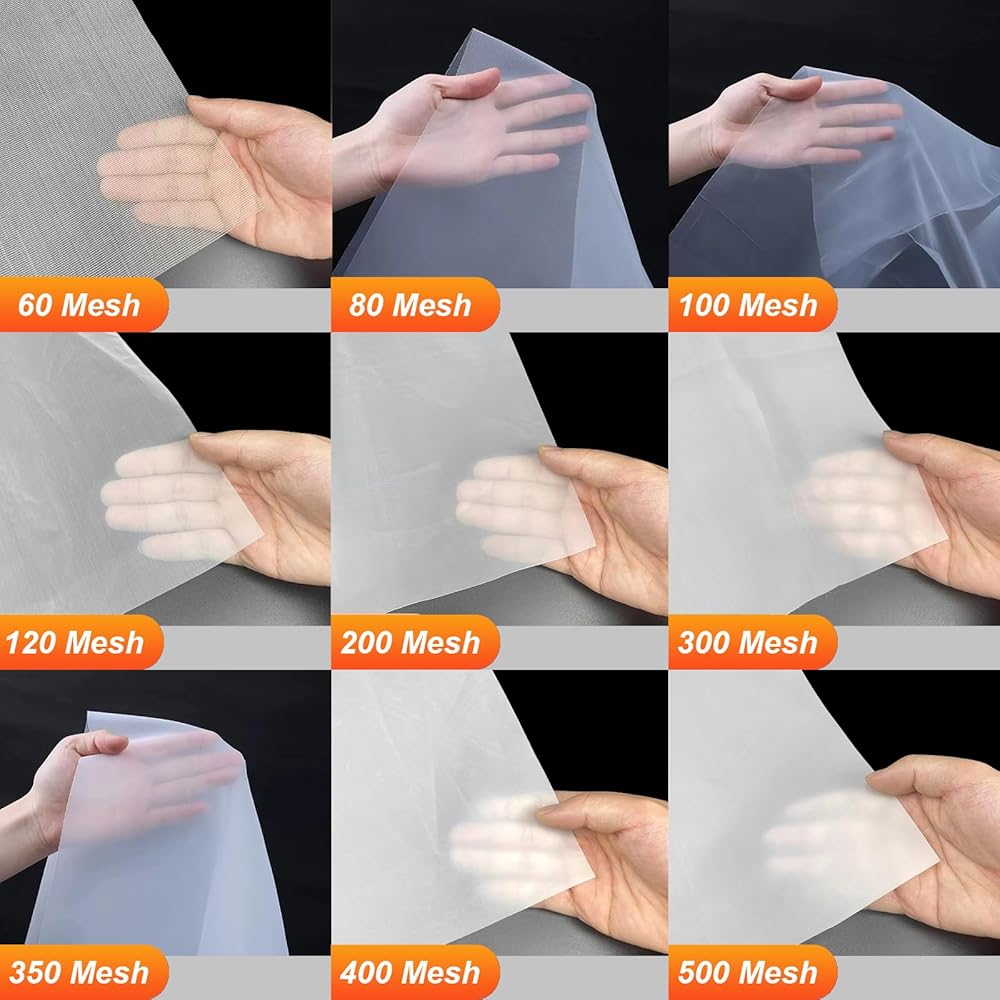
When we talk about screen printing mesh sizes, we are referring to the Mesh Count, which is the number of threads per linear inch (TPI). For example, a "110 mesh" has 110 threads crossing every square inch of the fabric.
The Inverse Relationship
Understanding the logic of mesh is simple:
-
Lower Mesh Counts (e.g., 25–110): Have larger openings and thicker threads. They allow more ink to pass through but offer lower detail.
-
Higher Mesh Counts (e.g., 200–400): Have smaller openings and thinner threads. They allow very little ink to pass through but offer extreme detail.
2. Master Conversion Table: TPI, cm, and Microns
To rank for screen printing mesh sizes, one must provide the data in all formats used globally. Modern shops often switch between US Imperial (TPI) and Metric ($threads/cm$) standards.
| Mesh Count (TPI) | Metric (n/cm) | Opening Size (μm) | Typical Design Use |
| 25 - 40 | 10 - 16 | 400+ | Glitter, Shimmer, Reflective Inks |
| 60 - 86 | 24 - 34 | 200 - 300 | Athletic jerseys, Heavy puff inks |
| 110 - 125 | 43 - 49 | 150 - 180 | Solid blocks, Underbases, High-opacity |
| 155 - 180 | 61 - 71 | 100 - 130 | Standard multi-color, Text, Retail hand |
| 200 - 230 | 77 - 90 | 70 - 90 | Fine details, Halftones (up to 45 LPI) |
| 280 - 305 | 110 - 120 | 50 - 65 | Simulated process, CMYK, UV inks |
| 355 - 400 | 140 - 160 | 30 - 45 | Fine-line electronics, High-res graphics |
3. Matching Mesh to Your Ink Type
A common failure in the print shop is using the right screen printing mesh size with the wrong ink viscosity. In 2026, ink technology has evolved, requiring a more nuanced approach.
Specialty and Glitter Inks (25 - 86 Mesh)
Glitter inks contain actual flakes of metal or polyester. If you try to push a 200-micron glitter flake through a 150-micron mesh opening, the screen will clog instantly. For specialty "Bling" effects, always stay in the ultra-low mesh range.
Plastisol Inks (110 - 230 Mesh)
Plastisol is the workhorse of the industry. Because it is thicker (higher viscosity) and does not dry in the screen, it is versatile. However, for a "soft-hand" feel, printers are moving toward 180 and 200 mesh to deposit less plastic onto the shirt.
Water-Based and Discharge Inks (155 - 305 Mesh)
Water-based inks are thinner and "dye" the fabric. They require higher screen printing mesh sizes to prevent the ink from "bleeding" or saturating the garment too heavily. A 155 mesh is the "sweet spot" for most water-based apparel printing.
.jpg)
4. The Science of Detail: Halftones and LPI
If you are printing photographic images, the screen printing mesh size must be calculated based on your Lines Per Inch (LPI) of the film positive.
The Rule of Four: To prevent "moiré" patterns and ensure every halftone dot has a thread to sit on, your mesh count should be at least 4 times your LPI.
-
If printing at 45 LPI, you need at least a 180 mesh.
-
If printing at 55 LPI, you need at least a 230 mesh.
5. Material Matters: White vs. Yellow Mesh
Beyond the screen printing mesh sizes, the color of the fabric affects your exposure quality.
-
White Mesh: Found typically in lower mesh counts (under 110). It allows light to "scatter" during exposure, which is fine for blocky designs but can blur fine details.
-
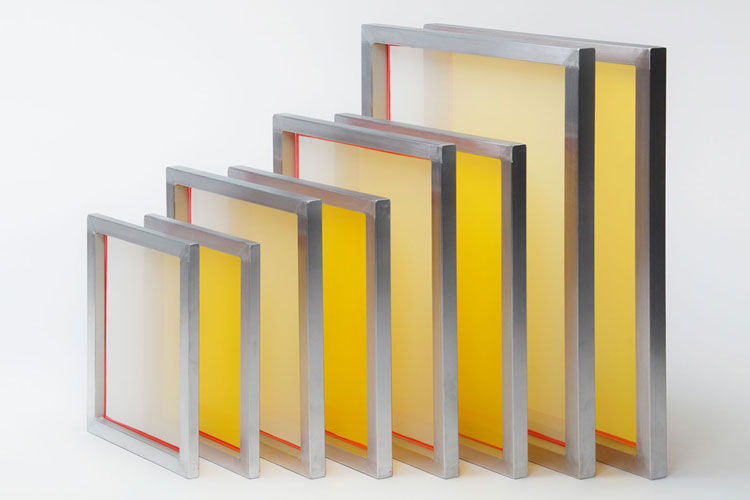
Yellow Mesh: Standard for counts above 155. The yellow pigment absorbs UV light, preventing "light creep" and ensuring that your fine lines and halftones stay crisp and sharp.
6. Advanced Physics: Thread Diameter and Open Area
For the "Professional Players" in industrial printing, the screen printing mesh size is only half the story. The Thread Diameter ($D$) determines the Percentage of Open Area ($A_o$).
The formula for Open Area is:
((Where O is the mesh opening and D is the thread diameter.))
Why does this matter? Two screens can both be "305 mesh," but if one uses a thinner thread, it will have a higher open area, allowing more ink to pass through. This is critical for achieving high-density prints with high-resolution mesh.
7. Maintenance and Troubleshooting
Selecting the right screen printing mesh sizes is a wasted effort if the screen is not maintained.
-
Tension is Key: A 230 mesh at low tension will cause "ghosting" and poor registration. Ensure your screens are stretched to at least 20-25 Newtons for optimal snap-off.
-
Degreasing: Finer mesh counts have more surface area to trap oils. Always use a professional degreaser to prevent pinholes in your emulsion.
-
Clogging (Drying in the Screen): If you are using high screen printing mesh sizes with water-based ink, use a "retarder" or "screen opener" to keep the small apertures from skinning over during production breaks.
8. FAQ: Frequently Asked Questions
Q: What is the most versatile screen printing mesh size for a beginner?
A: The 110 mesh and 155 mesh are the two must-have sizes for any new shop. The 110 handles block text and heavy whites, while the 155 handles standard multi-color designs.
Q: Can I print white ink through a 230 mesh?
A: It is possible but difficult. You would need to thin the ink significantly (reducing opacity) or use a high-pigment "curable reducer." For bright whites, stay between 110 and 155.
Q: Does mesh count affect exposure time?
A: Yes. Higher screen printing mesh sizes (more threads per inch) hold less emulsion. Therefore, a 305 mesh will generally expose faster than a 110 mesh using the same light source.
Conclusion: Engineering Your Perfect Print
Success in this industry is built on the foundation of the correct screen printing mesh size. By matching your mesh to your ink viscosity, design detail, and LPI requirements, you eliminate 90% of common printing failures before they reach the press.
Looking for premium-grade pre-stretched screens? Our 2026 collection features high-tension yellow monofilament mesh in every professional size, from 25 to 400 TPI. Optimize your output and reduce your scrap rate with our precision-engineered frames.
[Browse Our Mesh Size Catalog] | [Download the Mesh vs. Ink Chart] | [Consult an Exposure Specialist]
Pre:100% Pure Silk Mesh: The Ultimate Guide to High-Precision Filtration and Bio-Mechanical Excellence
Next:The Strategic Guide to Nylon Fabric Wholesale: 2026 Procurement & Industrial Trends
Tags:
 WhatsApp