The Definitive Guide to Nylon Membrane Filters: Engineering, Applications, and Procurement Excellence
The nylon membrane filter continues to be the reliable anchor for laboratories and industrial facilities worldwide. Its natural hydrophilicity, robust chemical resistance, and high-purity profile make it the ideal choice for a vast spectrum of filtrationIn the precision-driven world of laboratory filtration and industrial processing, the nylon membrane filter remains a cornerstone technology. Known for its versatile chemical compatibility and natural hydrophilicity, nylon membranes are the "workhorse" of analytical chemistry, pharmaceutical manufacturing, and environmental testing.
As global standards for purity and particle retention become increasingly stringent in 2026, understanding the technical nuances of nylon filtration is essential for optimizing laboratory workflows and ensuring the integrity of critical samples. This guide provides an exhaustive analysis of nylon membrane technology, from its molecular structure to its strategic role in modern high-performance liquid chromatography (HPLC) and sterile filtration.
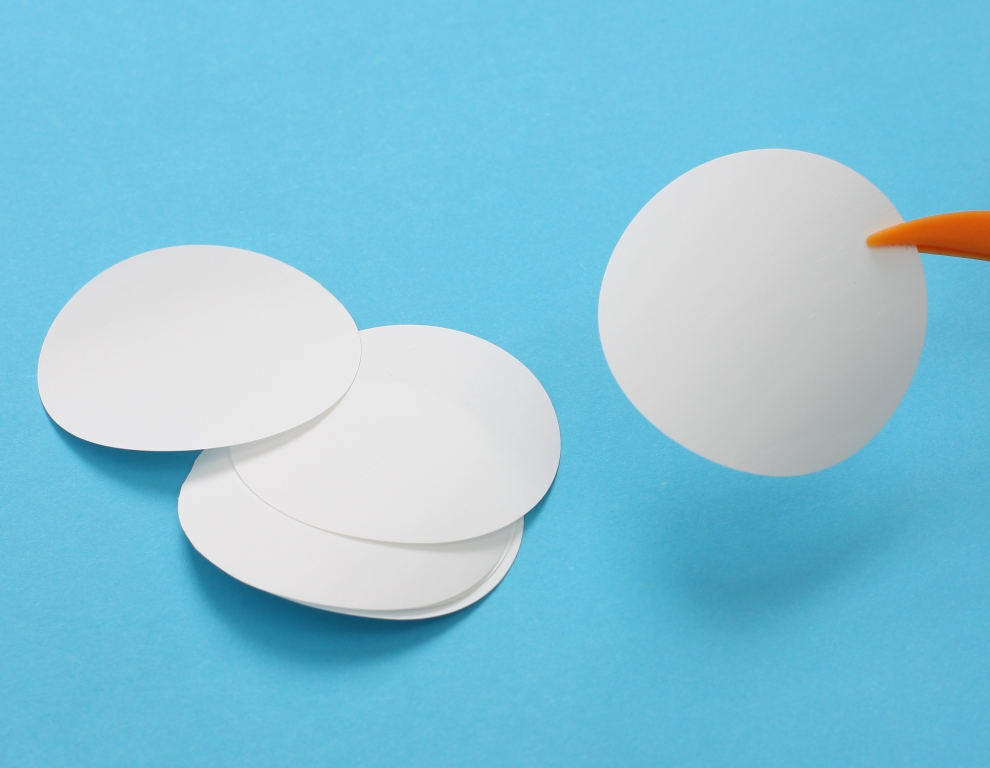
1. The Science of Nylon Filtration: Beyond the Surface
What distinguishes a nylon membrane filter from other synthetic polymers like PTFE or PES? The answer lies in its molecular composition—Polyamide (PA).
Natural Hydrophilicity
Unlike PTFE, which is inherently hydrophobic and requires alcohol "pre-wetting," nylon is naturally hydrophilic. This means it wets instantly with aqueous solutions. In a high-throughput lab environment, this eliminates a tedious preparation step, reduces solvent waste, and ensures consistent flow rates from the first drop.
High Protein Binding
One of the most defining characteristics of nylon is its high non-specific protein binding capacity. While this makes it unsuitable for certain protein recovery tasks, it makes nylon an exceptional choice for:
-
Southern/Northern Blotting: Securely binding DNA/RNA.
-
Enzyme Isolation: Capturing proteins for further analysis.
-
Bio-burden Reduction: Effectively removing organic contaminants from liquid samples.
Low Extractables
A high-quality nylon membrane filter is manufactured using a "solvent-cast" process that results in a highly uniform pore structure with extremely low levels of extractables. This ensures that the filter itself does not leach chemicals into the sample, which is critical for sensitive analytical techniques like HPLC and GC-MS.
2. Technical Specifications: The Micron and Flow Matrix
When sourcing nylon membrane filters, the pore size is the primary performance indicator. The choice of micron rating directly impacts the balance between filtration speed and particle retention.
Standard Pore Size Guide
| Pore Size (Micron) | Typical Application | Retention Efficiency |
| 0.10 $\mu m$ | Mycoplasma removal / Ultra-pure water | 99.99% |
| 0.22 $\mu m$ | Sterile filtration of buffers / HPLC solvents | Pharmaceutical standard |
| 0.45 $\mu m$ | General clarification / Sample prep | High throughput |
| 0.80 $\mu m$ - 5.0 $\mu m$ | Pre-filtration / Large particle removal | Coarse filtration |
The Bubble Point and Integrity Testing
For professional laboratories, the "Bubble Point" is the definitive test for membrane integrity. It measures the minimum pressure required to force air through a fully wetted membrane. A high-quality nylon membrane filter manufacturer will provide a validated bubble point for every batch to ensure no defects exist in the pore structure.
3. Chemical Compatibility: The Nylon Strength
Nylon’s reputation as a "universal" filter stems from its remarkable resistance to a wide range of solvents. However, understanding its limits is key to avoiding membrane dissolution or sample contamination.
Where Nylon Excels:
-
Alkaline Solutions: Nylon is exceptionally resistant to high-pH fluids.
-
Alcohols: Resistant to Ethanol, Methanol, and Isopropanol.
-
Aromatic Hydrocarbons: Excellent compatibility with Benzene and Toluene.
-
HPLC Solvents: The standard choice for Acetonitrile (ACN) and aqueous-organic mixtures.
Where to Avoid Nylon:
-
Strong Acids: Concentrated HCl or Nitric acid will degrade nylon.
-
Aggressive Halogenated Hydrocarbons: Use PTFE for these specialized applications.
4. Key Applications: From HPLC to Sterile Processing
The nylon membrane filter is utilized across various high-stakes industries where precision is non-negotiable.
A. HPLC Sample Preparation
In analytical chemistry, column longevity is tied to sample purity. A nylon syringe filter or disc membrane removes fine particulates that would otherwise clog the $1.8 \mu m$ or $3 \mu m$ packings of a modern HPLC column. Its low UV-absorbing extractables ensure a clean baseline in chromatograms.
B. Pharmaceutical and Biotech Manufacturing
Nylon membranes are frequently used for the sterile filtration of buffers and culture media. Because nylon can be sterilized via Autoclave (121°C) or Gamma Irradiation, it integrates seamlessly into aseptic processing lines.
C. Environmental Water Testing
For the detection of trace metals and organic pollutants, nylon provides a clean, consistent matrix that does not interfere with the detection limits of ICP-MS or LC-MS/MS equipment.
5. Selection Guide: Nylon vs. PES vs. PTFE
How do you know if a nylon membrane filter is the right choice for your specific protocol?
-
Is your sample aqueous or solvent-based? If it is aqueous or a mix, Nylon is faster. If it is 100% aggressive solvent, consider PTFE.
-
Is protein recovery important? If you need to keep 100% of the proteins in your solution, choose PES (Polyethersulfone), which has low protein binding. If you want to remove proteins or bind them, choose Nylon.
-
Is pH a factor? For high-pH (alkaline) fluids, Nylon is the winner. For highly acidic fluids, choose PTFE.
6. Manufacturing Excellence: Ensuring Batch Consistency
In 2026, the market for nylon membrane filters is flooded with low-cost alternatives. However, professional procurement managers focus on three quality pillars:
I. Pore Size Distribution
A cheap filter might be labeled "$0.45 \mu m$," but if the pore size distribution is wide, large particles will still pass through. Premium manufacturers utilize Scanning Electron Microscopy (SEM) to verify that the pore architecture is tight and uniform.
II. Validation and Certification
Does the manufacturer provide a Certificate of Analysis (COA)? Professional filters must be certified for:
-
Bacterial Retention: Challenged with Brevundimonas diminuta.
-
Endotoxin Levels: Tested via the LAL method.
-
USP Class VI Plastics Test: Ensuring biocompatibility.
III. Structural Reinforcement
For high-pressure applications, many nylon membranes are "supported" with a non-woven polyester or polypropylene layer. This prevents the membrane from rupturing during vacuum or pressure-driven filtration.
7. ROI Analysis: The Cost of "Cheap" Filtration
When evaluating the price of a nylon membrane filter, one must consider the Total Cost of Failure.
-
Scenario A: Using a $0.50 filter that has inconsistent pores. Result: HPLC column failure at $800 a piece + 2 days of lost lab time.
-
Scenario B: Using a $1.50 validated nylon filter. Result: Consistent data, 1000+ injections per column.
The "Professional Player" always chooses the validated membrane because the cost of the filter is negligible compared to the value of the equipment and the sample.
8. Frequently Asked Questions (FAQ)
Q: Can I autoclave nylon membrane filters?
A: Yes. Nylon membranes are thermally stable and can typically withstand standard autoclave cycles at 121°C for 20-30 minutes without losing integrity.
Q: Why is my nylon filter slowing down with aqueous samples?
A: This is often due to "particle loading." If your sample has a high solids content, consider using a Glass Fiber Pre-filter on top of the nylon membrane to extend its throughput.
Q: Is Nylon compatible with DMSO?
A: Yes, nylon generally has good compatibility with DMSO, making it a popular choice for filtering DMSO-dissolved drug compounds in pharmaceutical research.
Conclusion: The Backbone of Precision Filtration
The nylon membrane filter continues to be the reliable anchor for laboratories and industrial facilities worldwide. Its natural hydrophilicity, robust chemical resistance, and high-purity profile make it the ideal choice for a vast spectrum of filtration tasks. By prioritizing validated quality and understanding the technical requirements of your specific application, you ensure the highest levels of accuracy and efficiency in your work.
Looking for high-performance nylon filtration solutions? Our 2026 membrane series is engineered for the most demanding analytical and industrial environments. Contact our technical team for a compatibility audit or to request a sample pack for your laboratory validation.
[Request a Technical Quote] | [Download Chemical Compatibility Chart] | [Order a Validation Sample]
Nylon Membrane
Pre:The Strategic Guide to Nylon Fabric Wholesale: 2026 Procurement & Industrial Trends
Tags:
 WhatsApp